Here is Gemini's input regarding your problem:
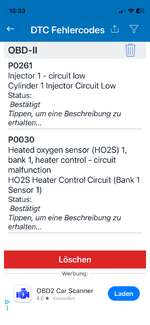
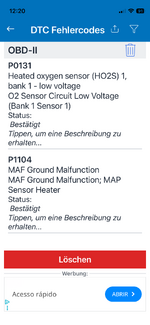
Checking an O2 sensor on the Himalayan 411 is straightforward because it is a standard automotive-style component. If your OBD2 scanner is throwing a code like
P0130 (Circuit Malfunction) or
P0131 (Low Voltage), you can verify the sensor's health using a
multimeter.
1. The Visual Inspection (The "Free" Test)
Before breaking out the tools, unplug the sensor and look at the tip:
- Sooty Black: Indicates an overly rich mixture (the sensor might be fine, but the engine is struggling).
- White/Gritty: Indicates silica contamination (usually from using the wrong gasket sealer or additives).
- Oil-fouled: If your bike is burning oil, the sensor will eventually "blind" itself.
2. Testing the Heater Circuit (Resistance)
Most O2 sensor failures on the Himalayan aren't the sensor's ability to read gas, but the
internal heater burning out.
- Set your multimeter to Ohms ($\Omega$).
- On the sensor plug, identify the two wires of the same color (usually white). These are the heater wires.
- Touch the probes to these two pins.
- Result: You should see a low resistance (typically 8 to 15 Ohms). If the multimeter reads "OL" (Open Loop) or infinite resistance, the heater is dead and you need a new sensor.
3. Testing the Signal (Voltage)
This tests if the sensor can actually "see" the oxygen levels.
- Reconnect the sensor and start the bike. Let it warm up for 5 minutes (narrowband sensors don't work when cold).
- Set your multimeter to DC Millivolts (mV).
- Back-probe the signal wire (usually black) and the ground wire (usually grey).
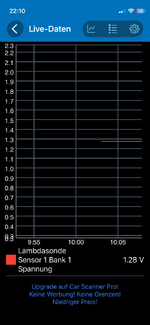
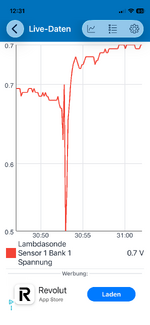
- Result: With the engine running, the voltage should "cross" back and forth between 0.1V (100mV) and 0.9V (900mV)rapidly.
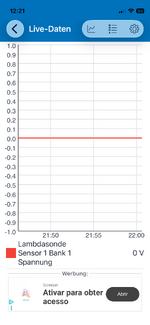
- If the voltage stays stuck at a steady 0.45V, the sensor is likely "lazy" or dead.
- If you snap the throttle open, you should see an instant jump toward 0.9V (rich).
4. The "Lighter Test" (Off-Bike)
If you have the sensor off the bike, you can do a bench test:
- Connect your multimeter to the signal wires (Black and Grey).
- Use a propane torch or a high-quality lighter to heat the sensor tip until it’s hot.
- Result: As the flame consumes the oxygen around the tip, the voltage should climb toward 0.9V. When you remove the flame, it should drop almost instantly to 0.1V. If it responds slowly, the sensor is defective.
A Common Himalayan "Fake" Error
Sometimes the Himalayan throws an O2 error not because the sensor is bad, but because there is an
exhaust leak at the header flange (where the pipe meets the engine). Fresh air sucks into the exhaust, hits the sensor, and the ECU panics because it thinks the bike is running lean. Check those two header nuts for tightness before buying a new sensor!