Exhaust Valve clearance

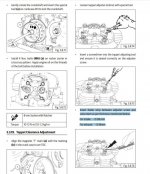
[ Just learnt that this is wrong and RE sent out a wrong update. They put pictures and specs of the J engine in the Himalayan service manual...So ignore the post of mine]I just learnt something today. A customer with a Hitchcocks stage 2 cam was not happy with the valve noise and Hitchcocks sent them a RE update to the engine manual. Guess what, the exhaust valve clearance is 0.18mm now. I agree with the above discussion that the exhaust valve clearance is to loose. Guess what I'm doing tonight, adjust that exhaust to 0.18mm. Anyway here is the page out of the manual.
 

Attachments

  • tappets.JPG
    tappets.JPG
    110.1 KB · Views: 748
Last edited:
give me an hour or so and I will check, either 1or. 8
 
a quote from @Sasa earlier in this thread.

"probably a more reasonable value would be like 0,18-0,20max, more in line with other bikes"

So eventually after the saga with frames cracking Magneto's frying, ECU's needing updates etc, we now have a Tappet clearance update.
How many more things go wrong with this machine :LOL:😆
And why wasnt all this sorted before release 😉
 
a quote from @Sasa earlier in this thread.

"probably a more reasonable value would be like 0,18-0,20max, more in line with other bikes"

So eventually after the saga with frames cracking Magneto's frying, ECU's needing updates etc, we now have a Tappet clearance update.
How many more things go wrong with this machine :LOL:😆
And why wasnt all this sorted before release 😉
Check out my edit previous post. Wrong info was sent out by RE.
 
Curious that manual says to align at the T when all my tdc have been calculated at the line below the T. Wasn't this a discussion at some point too?
[ Just learnt that this is wrong and RE sent out a wrong update. They put pictures and specs of the J engine in the Himalayan service manual...So ignore the post of mine]I just learnt something today. A customer with a Hitchcocks stage 2 cam was not happy with the valve noise and Hitchcocks sent them a RE update to the engine manual. Guess what, the exhaust valve clearance is 0.18mm now. I agree with the above discussion that the exhaust valve clearance is to loose. Guess what I'm doing tonight, adjust that exhaust to 0.18mm. Anyway here is the page out of the manual.
 
The Line isTDC.
But for setting the Tappets T is close enough
 
Just over 1 turn for exhaust and just a bit more under a 1/2 turn for inlet?
Or 8 and 3 thou tight
 
Just over 1 turn for exhaust and just a bit more under a 1/2 turn for inlet?
Or 8 and 3 thou tight
Explain it this noob please.🫣

If the thread pitch of tappets bolts are 0.75 then wouldn't 1 turn give 0.75mm gap for exhaust and 1/2 turn give 0.325mm gap for inlet??
 
Explain it this noob please.🫣

If the thread pitch of tappets bolts are 0.75 then wouldn't 1 turn give 0.75mm gap for exhaust and 1/2 turn give 0.325mm gap for inlet??
I blame it on the Decimal system, and the US's persistence in using a bastardized Imperial system :p
And not my inability to convert between the 2, I always use feeler gauges which have been freed from the holder and hang above my bench, last time I was able to read them it was 8 and a 4.(thou of course)
There is a lot of chatter about setting Tappets of late, its making more noise than the Tappets themselves.
I havent seen any burnt valves yet so they are not Too tight.
 
OK I keep from adding anymore chatter and 95% of the chatter will stop I guess.

Darn, now that I am quiet I can hear Himmas tappets again :oops: - off to do them the "turns" method.
 
Hi, looking at the valves of my motorbike I noticed that the exhaust stem, where the tappet works, has a convex surface facing upwards. I wonder how it is possible to adjust the valve clearance since we would be working on the edge with the feeler gauge.

I only have this photo but the problem is visible.
Has anyone who is more experienced ever noticed this?View attachment 1629View attachment 1630View attachment 1631
I'm no expert, but doesn't the top of the valve look damaged and cracked and not the normal smooth edge? if so wouldn't small fragments of steel be floating around in the engine? And more could break away with the constant hammering of the tappet?
 
From the picture it looks like what happened to my 2022 twice in 6,000km. Once with the original valves and cam and once with the Kent cam and Hitchcock replacement valves. I have always run the lash at 0.18mm so I have ruled out hammering. Both exhaust valve's stem tips lost their heat-treated hardness (temper), a failure often caused by extreme over-temperature conditions, resulting in severe wear, deformation, or breaking. The stem tip is usually hardened (often 50-59 HRC) to withstand the high-impact hammering from the rocker arm or lifter, and if that temper is lost, the metal softens, leading to "mushrooming" or rapid wear.

Here is a breakdown of why and how this occurs:

Causes of Hardness Loss

Extreme Overheating (Over-tempering): Exhaust valves operate in high-temperature environments (1,200°F–1,450°F+). If the engine runs too hot, or the valve fails to seat properly and cool, the tip can exceed its designed tempering temperature, causing the hardened martensitic structure to over-age, soften, and lose strength.
Excessive Valve Lash (Hammering): If the valve clearance (lash) is too high, the rocker arm slams against the valve tip, creating severe shock loading. This "hammering" effect combined with high heat can destroy the hardened tip.
Poor Lubrication/Friction: Lack of oil to the top end can cause frictional heat to build up at the tip, breaking down the tempered surface.
Improper Heat Treatment: During manufacturing, if the induction hardening process for the tip was incorrect, it may not have achieved or maintained proper hardness.

Consequences of Lost Hardness

Mushrooming: The tip of the valve stem flattens and spreads outwards, which can make it impossible to remove the valve from the guide.
Galling/Wear: The soft, un-tempered metal galls against the rocker arm, accelerating wear and creating debris that can damage the engine.
Valvetrain Noise: A worn or deformed tip often leads to a "ticking" or "popping" noise as the valve lash becomes excessive.
Fatigue Failure: Loss of hardness drops the fatigue properties of the alloy, allowing cracks to form and the tip to eventually break off.

Prevention

Maintain Correct Valve Lash: Regularly checking and adjusting valve clearances to prevent excessive hammering.
Proper Cooling: Ensuring proper engine cooling and heat management.
Use Quality Components: Using high-quality stainless steel (e.g., 21-4N) or Stellite-tipped valves, which are designed to hold their hardness better at high temperatures.


My reco is to use the RE recommended oil Castrol 20W50 Actevo, also check and change oil by the RE procedure or you will have low oil that can damage the exhaust valve tip. Install a motorcycle cylinder head temperature gauge and use it. The valve tappets on 411 can be replaced with better quality Honda Unicorn valve tappets. All else being said, our main challenge with the air cooled 411 is keeping the exhaust valve from overheating.
 
Hi, looking at the valves of my motorbike I noticed that the exhaust stem, where the tappet works, has a convex surface facing upwards. I wonder how it is possible to adjust the valve clearance since we would be working on the edge with the feeler gauge.

I only have this photo but the problem is visible.
Has anyone who is more experienced ever noticed this?View attachment 1629View attachment 1630View attachment 1631
Based on the fotos above, this is what happened to my 2022 twice within 6,000km. Once on the original valves and cam and then on the Kent cam and Hitchcock valves. I have pretty much ruled out hammering damage as I have used the 0.18mm lash spec from the moment I installed the new valves and cam. So the only other cause is valve stem overheating and a loss of its heat-treated temper.
An exhaust valve stem tip can lose its heat-treated hardness (temper), a failure often caused by extreme over-temperature conditions, resulting in severe wear, deformation, or breaking. The stem tip is usually hardened (often 50-59 HRC) to withstand the high-impact hammering from the rocker arm or lifter, and if that temper is lost, the metal softens, leading to "mushrooming" or rapid wear.

Here is a breakdown of why and how this occurs:

Causes of Hardness Loss

Extreme Overheating (Over-tempering): Exhaust valves operate in high-temperature environments (1,200°F–1,450°F+). If the engine runs too hot, or the valve fails to seat properly and cool, the tip can exceed its designed tempering temperature, causing the hardened martensitic structure to over-age, soften, and lose strength.
Excessive Valve Lash (Hammering): If the valve clearance (lash) is too high, the rocker arm slams against the valve tip, creating severe shock loading. This "hammering" effect combined with high heat can destroy the hardened tip.
Poor Lubrication/Friction: Lack of oil to the top end can cause frictional heat to build up at the tip, breaking down the tempered surface.
Improper Heat Treatment: During manufacturing, if the induction hardening process for the tip was incorrect, it may not have achieved or maintained proper hardness.
Consequences of Lost Hardness

Mushrooming: The tip of the valve stem flattens and spreads outwards, which can make it impossible to remove the valve from the guide.
Galling/Wear: The soft, un-tempered metal galls against the rocker arm, accelerating wear and creating debris that can damage the engine.
Valvetrain Noise: A worn or deformed tip often leads to a "ticking" or "popping" noise as the valve lash becomes excessive.
Fatigue Failure: Loss of hardness drops the fatigue properties of the alloy, allowing cracks to form and the tip to eventually break off.

Prevention

Maintain Correct Valve Lash: Regularly checking and adjusting valve clearances to prevent excessive hammering.
Proper Cooling: Ensuring proper engine cooling and heat management.
Use Quality Components: Using high-quality stainless steel (e.g., 21-4N) or Stellite-tipped valves, which are designed to hold their hardness better at high temperatures.

My reco is to use the RE recommended oil Castrol 20W50 Actevo, also check and change oil by the RE procedure designed around the oil cooler or you will have low engine oil that can damage the exhaust valve tip. Install a motorcycle cylinder head temperature gauge and use it. The valve tappets on 411 can be replaced with better quality Honda Unicorn valve tappets. All else being said, our main challenge with the air cooled 411 is keeping the exhaust valve from overheating and starting a chain reaction of failures. I guess that's why the 450 is water cooled.

 
Install a motorcycle cylinder head temperature gauge and use it.
from BS4 the 411 has it. you can get a readout via OBD2, dont put water in your 450 coolant system:
the Sherpa 452 engine uses a ready-to-use, ethylene glycol-based coolant with Organic Acid Technology (OAT) corrosion inhibitors.

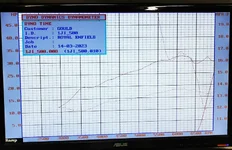
also, before panic breaks out: even on my carby 500cc Himas without head temperature gauge I never had a valve problem in 60k km driven with 33HP max output. I always used 15-50 full synth oil and changed every 5k km. I did install an extra oil temp gauge but the feeler was in the oil pan. It occasionally in slow city traffic with frequent stops and high ambient temperature showed over 120C. That was the time I would take a coffee break and let it cool down.
 
Last edited:
33HP, that is a claim!
I must have missed that Dyno chart ;) .
About Valve tips wearing out, I have seen recently a pic of some Hitchcock's premium price valves with serous dipping of the stem which was bad enough and made somewhat worse by the fact that both broke and destroyed the top end and Conrod!
RE valves are quite cheap and don't seem to fail any quicker than the premium ones.
Changing oil frequently is a good move whether synthetic or mineral.
 
Mine is knocking on 50 000kms...10 000 on 477 kit and 20 000 on HT and Tec cams and the valves are cupped. Bike going like a champ so I just ride the thing and stopped worrying about anything . Me taming the Southern Alps.👍😆
20260110_125408.jpg
 
33HP, that is a claim!
I must have missed that Dyno chart
not possible, it was yours. I have to admit my own Himas where never dynoed but I assume for the time being that similar improvements lead to similar results.
 

Attachments

  • 500cc-86mm-Hima-HT-b-decat-open-air-filter-widened-head-polished-TB-BS4-with-red-box.webp
    500cc-86mm-Hima-HT-b-decat-open-air-filter-widened-head-polished-TB-BS4-with-red-box.webp
    132.1 KB · Views: 12
Back
Top