Do we use used cylinders?

sam2019

Administrator
Staff member
Distributor
Developer
477 Owner
One French company who bought a 410 set from us claims we sent a used cylinder - and further more that the piston inside the cylinder has moved up and down during shipping and damaged the wall.

1) we NEVER use used cylinders. It would not be worth it, they are relatively cheap in India. Further there is no market for the modern cylinders we use (there is one for the old pre-2000 bullets) so even if we wanted, we could not get them.

2) The piston for transport is logged inside the liner. That is the most secure place for it. it has bubble wrap under and above it which keeps it from moving, but even if it did move it is very unlikely that a few up and down movements with a total path length of maybe 2cm would do any damage. Consider that the liner is not just bored but also honed to fit this piston. small movement would result in no discernible scratches on the wall.

3) we pack very thoroughly, we even use a metal box for the shipping! nothing moves inside that box. It is stuffed with bubble wrap everywhere.
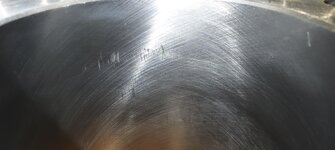
 
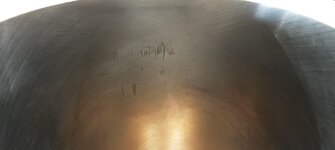
The parcel was delivered to them on 22nd, it took them 2 weeks to figure out there was damage? You are a workshop, so assuming your customer paid for it would it not be your responsibility to check the content immediately?
 
I have received these pictures of the damage, I am at a loss to explain them. We do replace the liner so the question of a used cylinder is irrelevant for this damage. Did our boring and honing guy scratch it, then tried to cover it up? Was this liner damaged before it got bored/honed?
But then our guy would have seen the damage and rejected the liner.
It wasnt during packing (I did the packing).
anybody has any idea?
 

Attachments

  • 1785857688557 (Copy).jpg
    1785857688557 (Copy).jpg
    180.9 KB · Views: 8
  • 1785857688572 (Copy).jpg
    1785857688572 (Copy).jpg
    83 KB · Views: 5
Run it few hundred kms and it will go away, customer is being overly fussy IMO
 
Run it few hundred kms and it will go away, customer is being overly fussy IMO
This may be true but how did the scratch get there in the first place? I contacted our boring/honing guy and he swears he would have seen it and of course not used that liner. makes sense to me. The raw liner is not that expensive and delivering a damaged liner is simply a stupid move.
 
I was showing the pictures to Antropics AI for analysis and this is what it says. If the scratches came after honing it is near impossible that we made them bc after honing the cylinder is collected by me from the workshop, then re-packed for shipment. Which means it is in my hands the entire time and I would have known if such a scratch appeared, not to mention the near impossibility to create such a scratch just by packing the lot.
-------------------------------------------------------------
Looking at both photos, this is a cylinder bore with a cross-hatch honing pattern, and there's a cluster of short vertical scratches near the top-center.

A few things point toward the scratches happening after honing, not before

  1. They cut across the crosshatch, not through it — the diagonal hone marks appear to stop or get interrupted right where the vertical scratches are, rather than the crosshatch lines continuing uninterrupted across the scratch. If the scratch had existed before honing, the stones would have dragged material across it on both diagonals and you'd typically see the crosshatch pattern running through the scratch (softened/blended), not stopping at it.
  2. Sharp, fresh appearance — the scratches look crisp and dark/defined against the surrounding surface, without the polished/burnished look the rest of the bore has from the honing stones. A pre-hone scratch usually gets its edges knocked down and its bottom skimmed by the abrasive stones, giving it a duller, less sharp profile.
  3. Orientation — they run essentially vertical (parallel to the bore axis), which doesn't match the ~45–60° crosshatch angle. That's consistent with something (debris, a tool, a ring land, contamination) dragging axially during assembly or a post-hone process step, rather than a random pre-machining defect that would have no particular relationship to the axis.

That combination — crosshatch not passing through them, sharp unworn edges, axial orientation — is the classic visual signature machinists look for to call a scratch "post-hone."

That said, photos alone aren't 100% conclusive. To be more certain I'd want:
  • A raking light / magnified inspection (10x loupe) to check if the scratch bottom shows any hone-stone abrasion texture in it
  • A fingernail/pick test for depth and burr direction
  • Knowing the process order (was this bore plateau-honed after the photo, or is honing already complete?)

If you can get a closer, better-lit macro shot straight down the scratch (not at this glancing angle), I can take a more confident look.
 
The customer came up with an idea that may work as explanation: we left the pin in the piston but the circlips separate. The pin could have moved during transport and made these marks. It never happened before but who knows, there is always a first time. I offered to send an exchange.
 
Back
Top